This course is designed for beginning graduate students in the Physics and Applied & Engineering Physics programs. Others are welcome too, of course, but we assume you have already taken a rigorous quantum mechanics course and are familiar with the basic concepts and notation.
The course material, an online text titled A Quantum Mechanics Companion, was developed in the Fall 2025 semester. The students in that semester participated as editors of the document on Overleaf. QMC will be revised in Fall 2026 and students will be "viewers". Only enrolled students will receive Overleaf invitations. Access to QMC is essential, because the weekly homework assignments are taken from the exercises at the ends of chapters. Lectures will closely follow QMC. The weekly reading and homework assignments are announced in lecture.
A few words about QMC from the author:
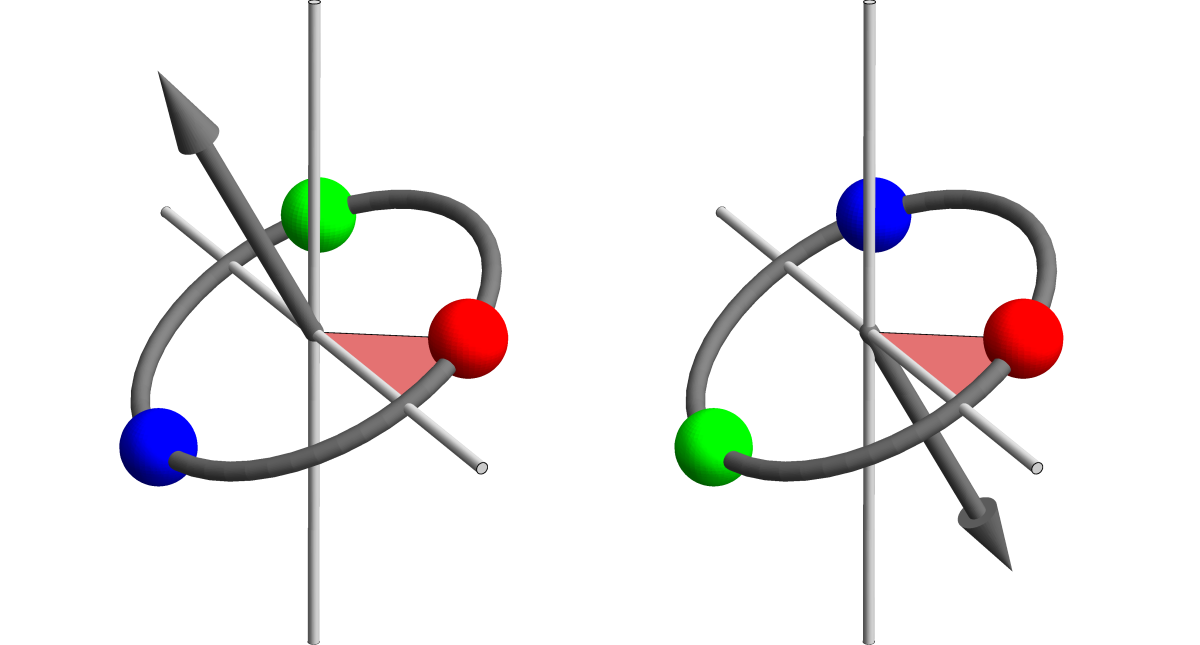
The most common reaction of my colleagues, on hearing about this project, was "How will your book be any different from the dozens of books already out there?" My short answer to them is that I've tried to minimize formalism and maximize phenomena. Sending them the first chapter was another way of satisfying their curiosity.
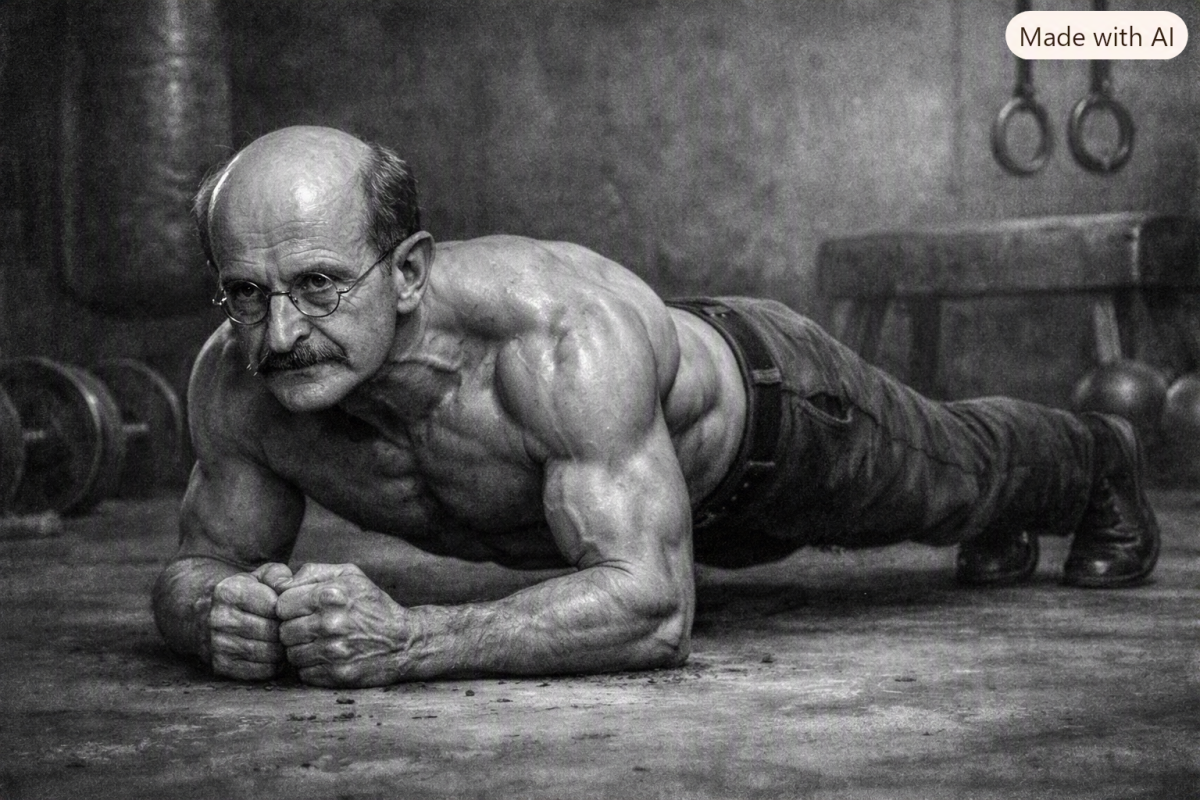
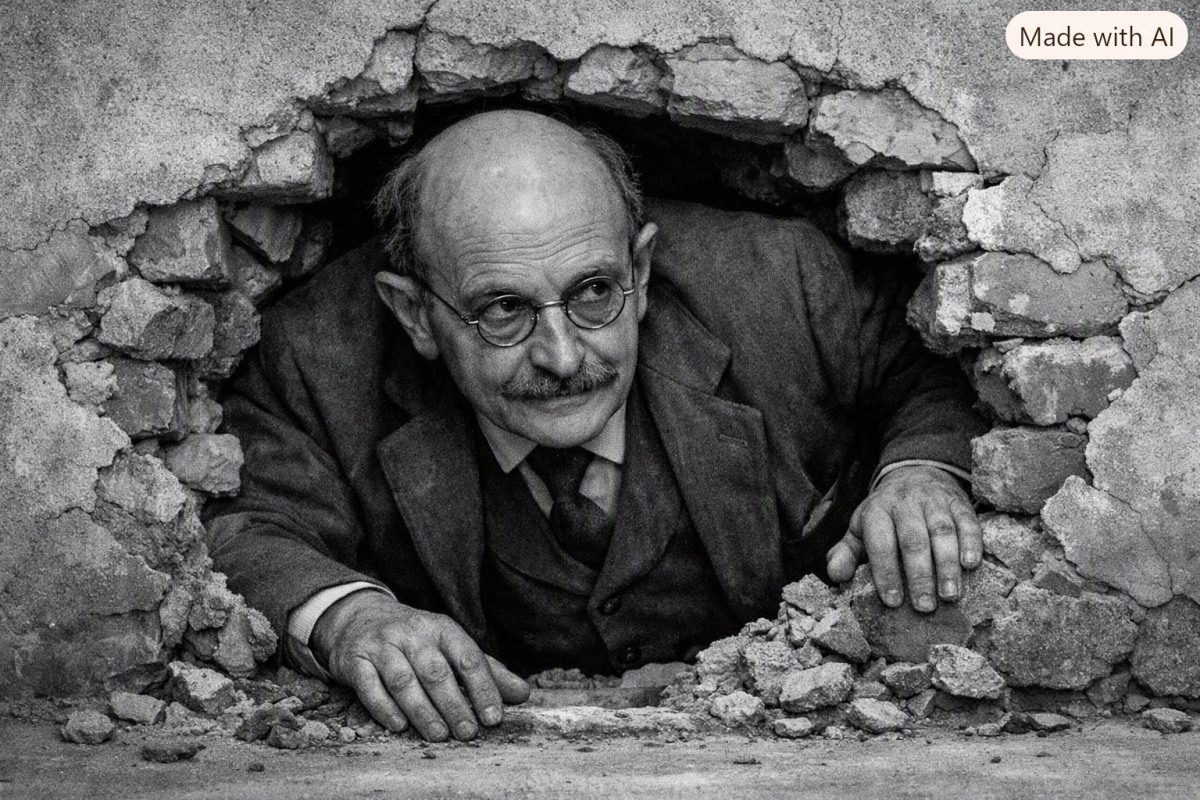
Fresh material for a mature subject is important in the age of AI. AIs will only get smarter and more helpful when given new treatments and novel examples. To maximize creative content I did not use AI when writing QMC in 2025. There was one exception: Images of Max Planck doing silly things at the start of every chapter. But there's been a policy change with MS Copilot since then. First, the "Made with AI" tag in the upper right hand corner, and very recently, a ban on historical figures like Planck, as in the above images made before the ban went into effect. Sadly, there will be no planking (or tunneling) Plancks this semester.
Course Information
- Meeting times: M 2:35-3:50, W 3:30-4:45
- Room: Rockefeller 103
- Desert Island Project proposal due date: Monday, October. 5
- Desert Island Project due date: Monday, Dec. 7
- Homework & Readings from QMC announced in lecture
- This course does not have a Canvas site.
- Course grade is based on homework and the Desert Island Project. There are no exams.
- Instructor: Veit Elser, PSB 426, email
- Grader: Jake Parsons, email
- Office hours: Clark 294F, F 6-9pm, Sat/Sun 11am-7pm
Announcements
- "Office hours" provide an environment for students to work together. If you need clarification or some tips on the homework, Prof. Elser is on-call via Zoom 6-9pm Friday. Just email the invitation.
- If your homework is written/printed on multiple pieces of paper, please staple them together.
- Desert Island Project proposals should be submitted well before the deadline.
- Prof. Elser cannot be available (via Zoom) for office hours today (10/2), but will make an appearance in Clark 294F at 1-3pm this Sunday (10/4) to help with homework and discuss Desert Island projects.
Weekly Homework & Reading
- (8/24) HW: 1.2 1.3 2.1 (due 8/31) Read: Chapter 1, Section 2.1
- (8/31) HW: 2.2 3.1 3.2 3.3 (due 9/9) Read: Section 2.6 (WKBJ), Chapters 3 & 4
- (9/7) HW: 3.4 4.1 4.2 4.3 (due 9/16) Read: Section 5.1 and relevant sections of Chapter 2
- (9/14) HW: 2.4 2.9 2.14 2.15 (due 9/23) Read: Chapter 5, sections 2.4, 2.7.3, 2.7.4 and 2.7.5 of Chapter 2
- (9/21) HW: 2.7 2.8 5.1 6.1 (due 9/30) Read: Chapter 6, sections 2.3 and 2.5 of Chapter 2
- (9/28) HW: 2.3 6.2 6.3 (due 10/7) Read: Chapter 7
Desert Island Project topics
- Hydrogen atom with a self-repelling electron, James Talbot
- How a single hydrogen atom heats a superconducting cavity, Irene Wang
- Bouncing on the quantum floor: a particle in Earth's gravitational field, Florent Teixeira
- Delta-function-potential model of polar molecules, Weixi Huang
- Quantum interference on a ring: The spectrum of a particle with two delta-function barriers, Marquice Sanchez-Fleming
- Two electrons in a 3D quantum dot, Oliver Norregaard
- The quantum pendulum at large energies, Alex He
- Comparing classical and quantum time evolution of an electron in multipole magnetic fields, Evan Root
- Electron dynamics in the Dirac-comb, Jack Simoni
- Instability of a quantum particle on the inverted parabola, Rebecca Guan
- Oscillating-stiffness quantum harmonic oscillator, Duc Nguyen
- Quantum particle on a vertical rotating hoop, Ziqi Sun
- Spectrum of an alkali metal atom encapsulated in a carbon nanotube, Nick Bagby
- Particle in a periodically driven double-well potential, Hanyan Cai
- Quantum Coriolis force, Hailey Murray
- Field ionization of hydrogen, Sarah Heller
- Wave functions and spectra of hydrogen in the plum pudding model, Luke Studt
- A neutral atom near a periodically charged wire, Hua Tu
- Quantum mechanics of a charge in the field of a magnetic monopole, Yinuan Liang
- Can an attractive shell make a hard sphere invisible to a quantum particle?, Yichen Xiong
- Quantum Norton's dome and the classical limit, Yeyang Xu
- Calculating the lifetime of an alpha-emitting nucleus with a spherically symmetric potential, Jenna Lawson
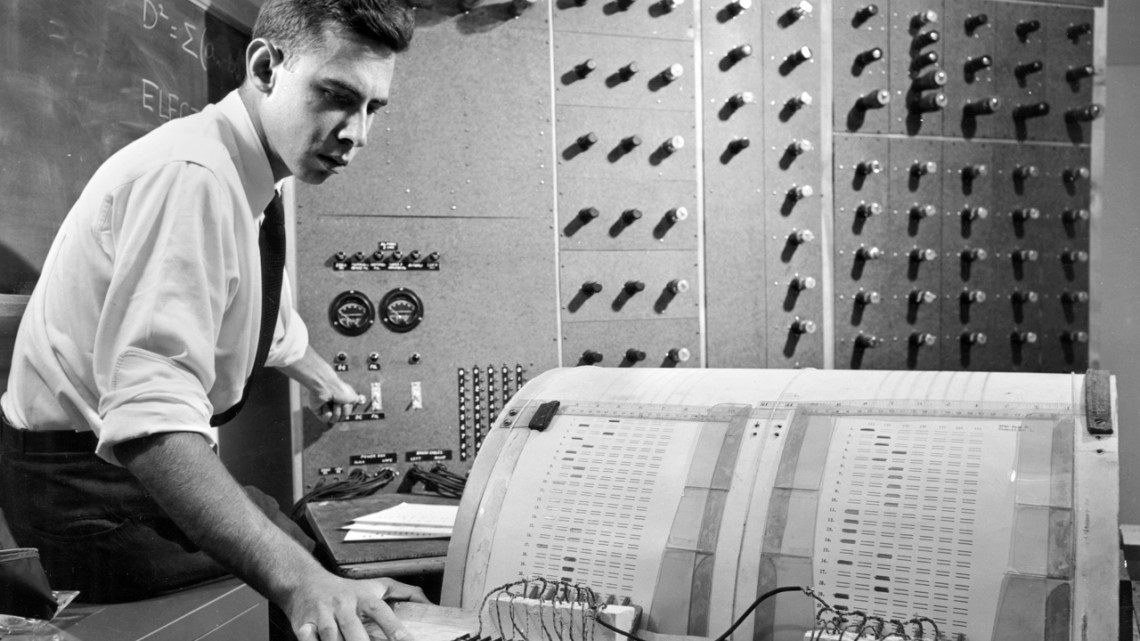
Frank Rosenblatt (July 11, 1928 - July 11, 1971)
Invented and built the first AI (perceptron) while working at the Cornell Aeronautical Laboratory 1957-1958. He built an observatory at his home in Brooktondale to search for extraterrestrial laser sources as evidence of intelligent life.